

The Nipah Virus Outbreak in India has grabbed global attention as health authorities sound an urgent alert after detection of suspected and confirmed cases in West Bengal. This rare yet severe virus has prompted swift action from medical teams and governments across Asia. The situation remains under active surveillance as public health measures intensify.
Today, In this article we will look at Nipah Virus Outbreak in India on Mediafeed.
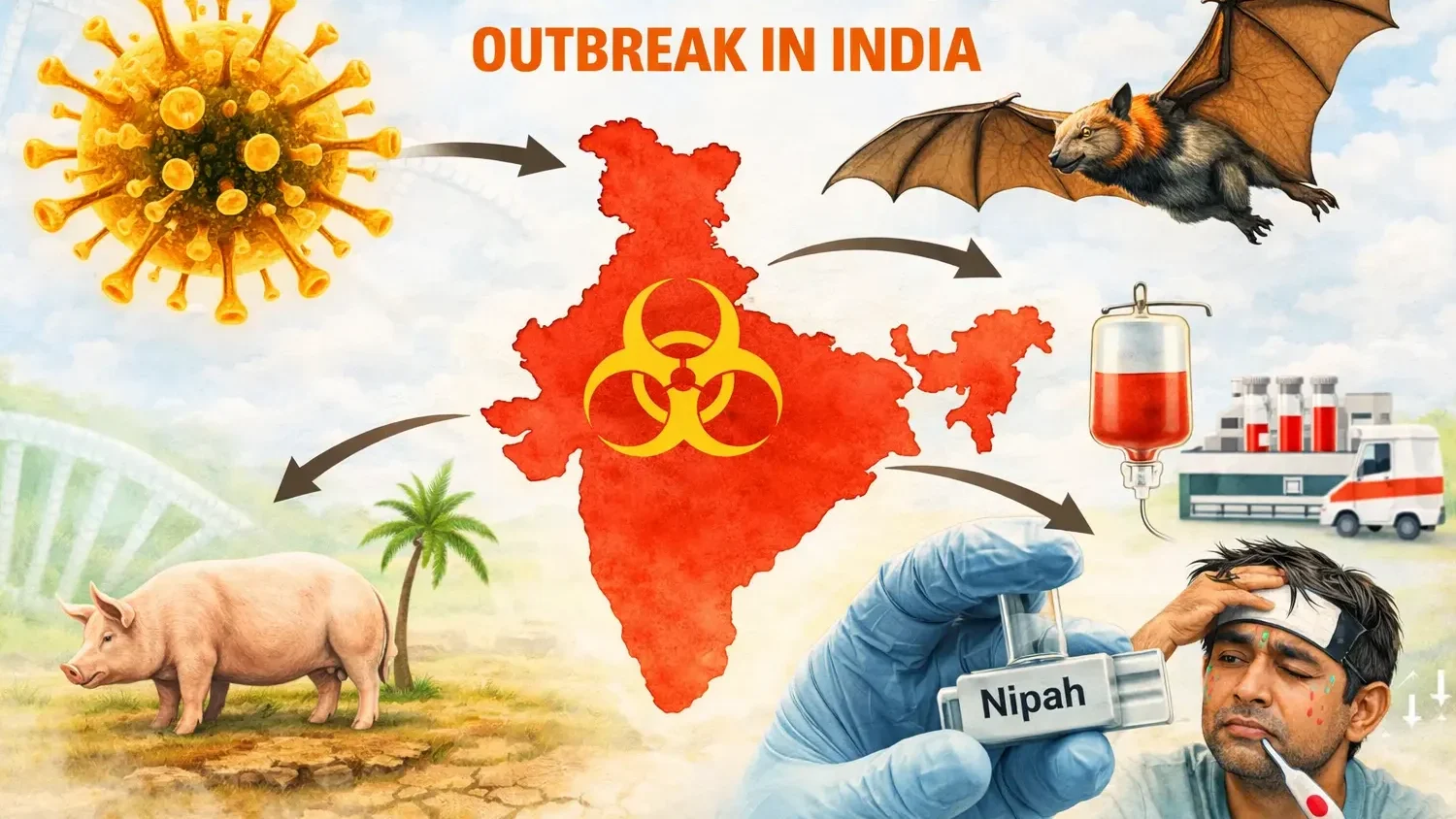
Nipah Virus Outbreak in India
The Nipah virus is a zoonotic pathogen that can spread from animals to humans and between humans through direct contact or infected bodily fluids. Fruit bats of the Pteropus species are known natural hosts of the virus, while human-to-human transmission occurs primarily in healthcare or close-contact settings.
Recent confirmations of the virus in India’s West Bengal state have led to heightened alertness. Two laboratory-confirmed cases were identified in late December 2025 among healthcare workers at a hospital in Barasat. One patient showed clinical improvement, while the other remained in critical condition during treatment. Health authorities have tested and monitored nearly 200 contacts of confirmed cases, with no additional infections detected so far.
Key Facts About Nipah Virus:
| Feature | Details |
|---|---|
| Virus Type | Zoonotic Henipavirus |
| Natural Host | Fruit bats (Pteropus spp.) |
| Transmission | Animal to human / Human to human |
| Symptoms | Fever, headache, respiratory issues, encephalitis |
| Fatality Rate | 40% – 75% (varies by outbreak) |
| Vaccine | No licensed vaccine available |
| Treatment | Supportive care only |
Breakdown of Nipah Virus Activity in India
Confirmed and Suspected Cases
Initial suspected cases were identified by a regional diagnostic laboratory in early January, and subsequent tests confirmed Nipah virus infection in two healthcare workers. These cases mark one of the few Nipah virus outbreaks in West Bengal, with previous occurrences recorded in the early 2000s and other parts of India in recent years.
While the term “outbreak” often leads to alarm, health authorities emphasize that these infections appear contained within healthcare settings and there is no evidence yet of widespread community transmission.
Public Health Response in India
Indian health agencies have activated rigorous surveillance and response strategies including:
- Immediate isolation of confirmed cases
- Extensive contact tracing and testing
- Monitoring of asymptomatic individuals
- Enhanced laboratory support
- Field investigations in affected regions
These measures prioritize preventing further spread and ensuring rapid detection of any new infections.
Symptoms and Warning Signs to Watch
Understanding symptoms is critical for early detection. Common signs linked to the Nipah virus include:
- High fever
- Severe headache
- Muscle pain
- Vomiting
- Respiratory distress
- Encephalitis (brain inflammation)
- Confusion and altered consciousness
Healthcare professionals stress that symptoms can progress rapidly, making early medical attention essential for high-risk individuals.
Regional and International Response
The Nipah Virus Outbreak in India has prompted neighboring countries to take precautionary actions. Airports across Asia are tightening health screenings, reminiscent of COVID-era protocols, especially for travelers arriving from affected Indian regions.
Several nations including Thailand, Singapore, Nepal, and Vietnam have implemented or expanded screening measures to protect public health and reassure citizens.
- Thailand: Ready to deploy advanced testing (RT-PCR) for suspected cases.
- Nepal: Issued Nipah testing and surveillance guidelines.
- Vietnam: Launched defense measures despite no domestic cases.
These efforts aim to prevent cross-border spread and protect communities across the region.
Containment and Risk Assessment
- Despite widespread measures, global health organizations maintain that the current risk of broader transmission remains low. Comprehensive contact tracing and negative test results among exposed individuals support this assessment.
- Experts also highlight that while Nipah virus can be deadly, efficient containment efforts and early detection reduce the chance of a larger outbreak.
Important Precautions for the Public
To minimize exposure risk, authorities recommend:
- Avoiding contact with fruit bats and other potential carriers
- Not consuming raw palm sap or fruits that may be contaminated
- Practicing good hygiene, including handwashing
- Seeking immediate medical care if symptoms develop
These proactive habits support community safety and help reduce fear and misinformation.

Conclusion
The Nipah Virus Outbreak in India has tested public health systems and prompted cross-border preparedness. The outbreak response showcases rapid action by Indian health authorities, extensive testing protocols, and strong regional cooperation. Although the situation continues to evolve, ongoing surveillance and robust containment strategies reduce the likelihood of widespread transmission.
Also read: Nipah Virus Cases Alert






 Join WhatsApp