

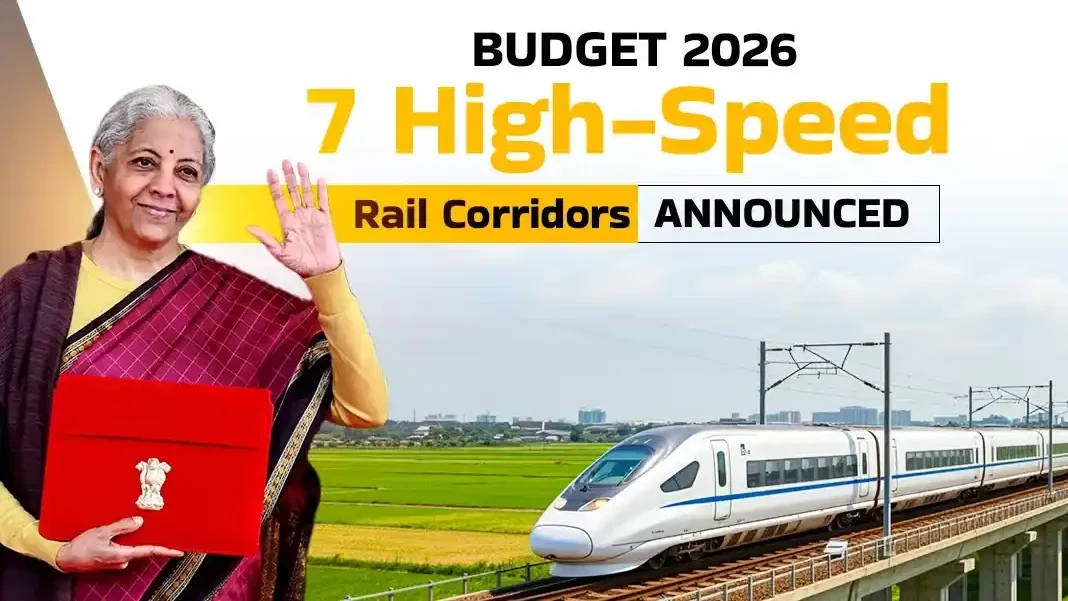
The High Speed Rail Corridor Budget stands as a transformative pillar of Budget 2026 and it signals a bold shift in Indias transport planning. The High Speed Rail Corridor Budget focuses on faster travel stronger regional links and long term economic growth across key corridors.
Today, In this article we will look at High Speed Rail Corridor Budget on Mediafeed.
High Speed Rail Corridor Budget Overview
The High Speed Rail Corridor Budget presents a clear vision for modern rail mobility across India. The High Speed Rail Corridor Budget aims to reduce travel time and improve safety and enhance productivity.
The government views high speed rail as a strategic asset. The policy links rail speed with economic efficiency. The budget supports future ready infrastructure. The plan aligns with national development goals. The High Speed Rail Corridor Budget also reflects confidence in long term investment. The focus remains on durable assets. The approach balances growth and sustainability.
| Component | Allocation / Plan |
|---|---|
| Indian Railways Capex | ₹2.93 lakh crore (record allocation) |
| High Speed Rail Corridors | Part of ₹16 lakh crore long-term investment |
| Target Network Length | Nearly 4,000 km of HSR routes |
India Announces Seven High-Speed Rail Corridors
In the Union Budget 2026–27, Finance Minister Nirmala Sitharaman unveiled plans to construct seven high-speed rail corridors as part of the High Speed Rail Corridor Budget. These corridors are envisioned to transform inter-city travel and boost economic growth across regions.
Seven High-Speed Rail Corridors in Budget 2026
The key corridors proposed under the new High Speed Rail Corridor Budget include:
- Mumbai to Pune
- Pune to Hyderabad
- Hyderabad to Bengaluru
- Hyderabad to Chennai
- Chennai to Bengaluru
- Delhi to Varanasi
- Varanasi to Siliguri
Strategic Importance of the High Speed Rail Corridor Budget
The High Speed Rail Corridor Budget focuses on building a future-centric rail network with modern infrastructure, faster speeds and improved safety standards.
Major Strategic Goals:
- Reduced travel time across long distances
- Lower carbon emissions compared to air and road travel
- Seamless connectivity between economic and cultural hubs
- Boost to regional economies through improved mobility
Financial Allocation and Economic Impact
Budget 2026 offers a robust capital expenditure push for Indian Railways, reflecting the priority given to rail modernization and high-speed rail expansion.
Capital Expenditure Highlights:
| Component | Allocation / Plan |
|---|---|
| Indian Railways Capex | ₹2.93 lakh crore (record allocation) |
| High Speed Rail Corridors | Part of ₹16 lakh crore long-term investment |
| Target Network Length | Nearly 4,000 km of HSR routes |
How High-Speed Rail Will Transform Travel Times
One of the most exciting aspects of the High Speed Rail Corridor Budget is the dramatic reduction in travel times planned for the new routes.
Expected Indicative Travel Times:
| High-Speed Corridor | Projected Travel Time |
|---|---|
| Mumbai–Pune | ~45–48 minutes |
| Pune–Hyderabad | ~1 hr 55 mins |
| Chennai–Bengaluru | ~1 hr 13 mins |
| Bengaluru–Hyderabad | ~2 hrs |
| Delhi–Varanasi | ~3 hrs 50 mins |
| Varanasi–Siliguri | ~2 hrs 55 mins |
Expanding India’s Rail Footprint
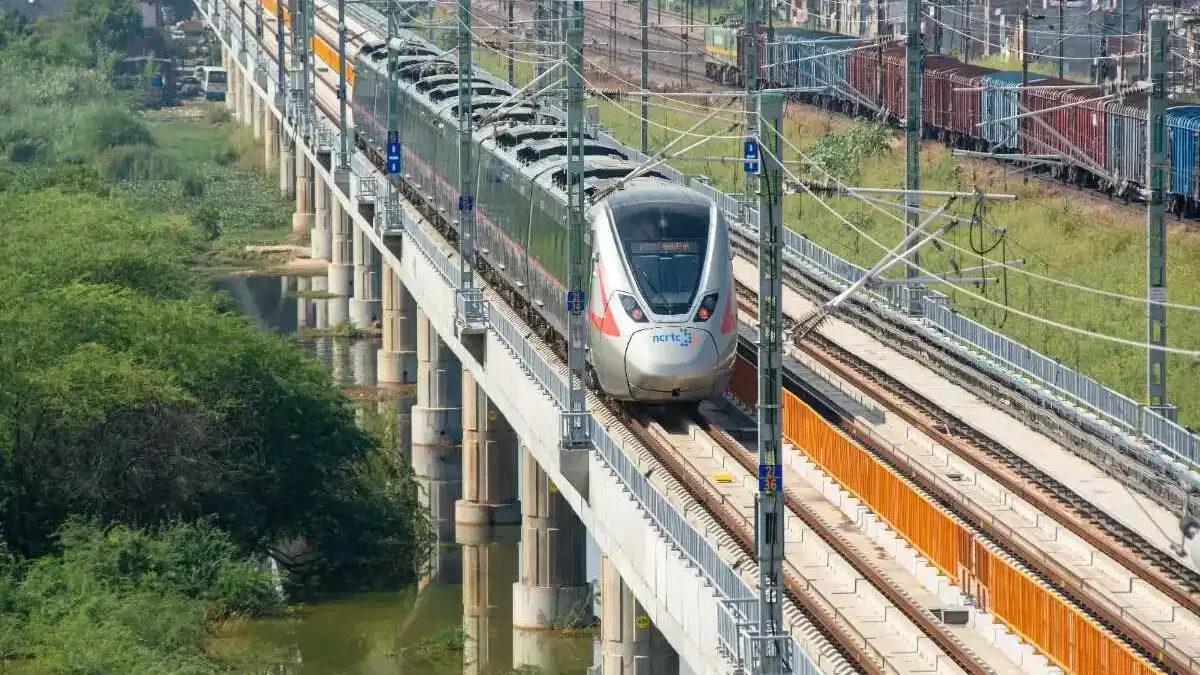
At present, India does not have any operational high-speed rail lines in service. The Mumbai–Ahmedabad high-speed rail corridor is currently under construction as the country’s first bullet train project. It is being developed to operate trains at speeds of up to 320 km/h.
The new corridors announced in Budget 2026 complement this ongoing project and expand the footprint of high-speed rail across India. Projects like the Varanasi–Siliguri high-speed corridor aim to improve connectivity in eastern India and support economic growth across multiple states.
Sustainable Growth and Regional Development
The High Speed Rail Corridor Budget is not just about fast trains. It also plays a role in supporting regional development, tourism growth, and employment generation.
- Tier-II and Tier-III cities gain faster links to larger urban centres.
- Eastern regions, especially through the Varanasi–Siliguri corridor, are expected to see tourism and trade gains.
- Faster rail services can lead to new economic clusters and investments along the routes.
High-speed rail is expected to encourage green transport and shift travel preferences from road and short-haul flights to more energy-efficient train travel.
Conclusion
The High Speed Rail Corridor Budget under Budget 2026 represents one of the most ambitious transformations of India’s transport infrastructure in decades. With seven high-speed rail corridors, massive financial backing and a focus on sustainable growth, the initiative aims to reshape how people move across the country.
As the projects move from blueprint to execution, the High Speed Rail Corridor Budget is likely to bring faster journeys, stronger economic linkages and long-term connectivity that supports national development goals.
Also read: Army Chief Naravane Memoir Controversy




 Join WhatsApp